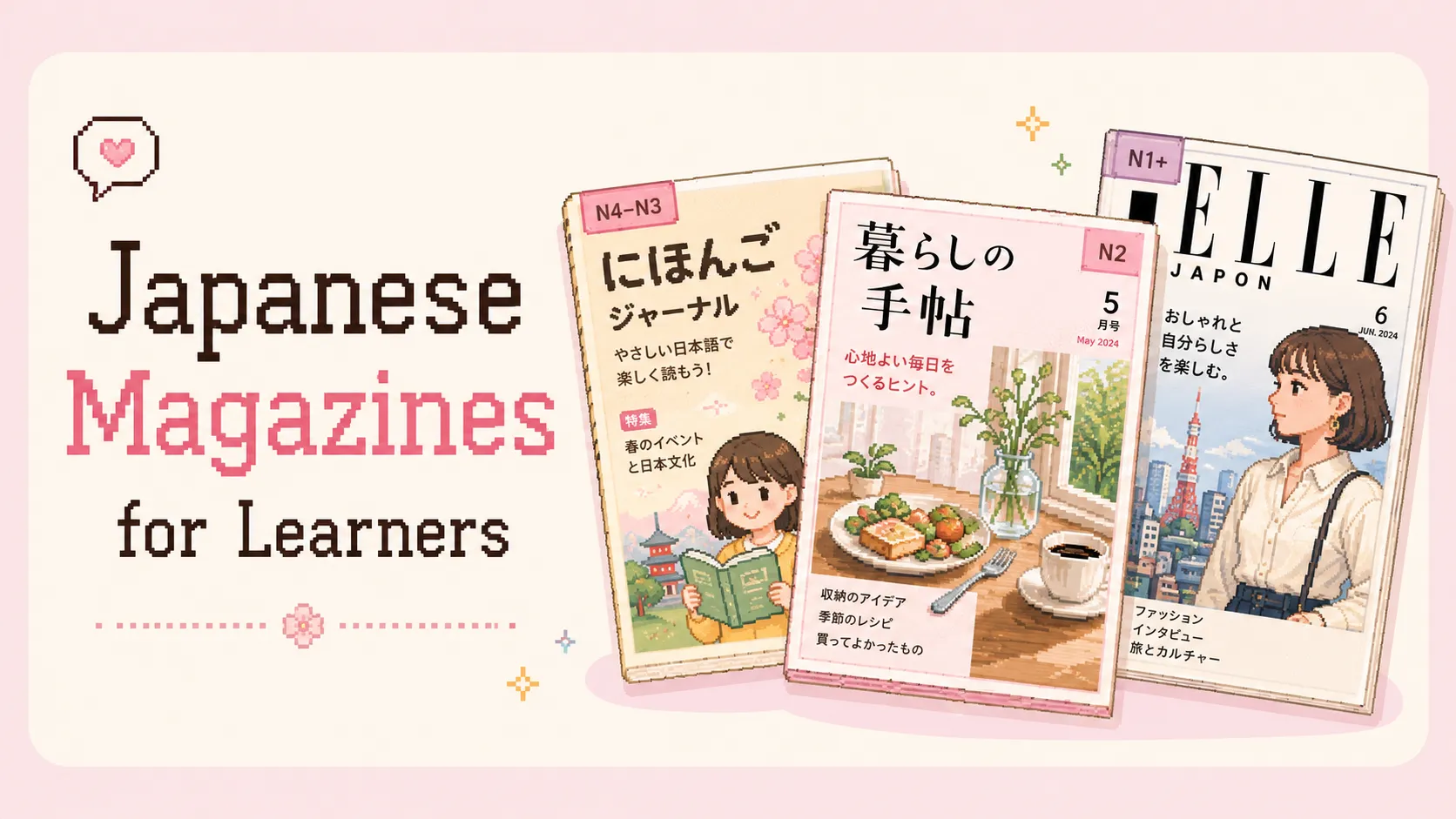
I like learning Japanese vocabulary and expressions in context, especially through news, magazines, interviews, and other real content. Seeing the same words used naturally makes them much easier for me to remember than studying them on their own.
I have tried learner magazines, youth newspapers, lifestyle magazines, and native news publications. Some matched my level but were too narrow or too difficult to keep reading. These are the options I think are most useful at different stages.
3 Quick Answers
- N4–N3: Start with supported reading like Makoto+, Hiragana Times, or easier native magazines.
- N2–N1: Choose native magazines around work, lifestyle, news, or culture to build useful vocabulary in context.
- Before subscribing: Try free articles or preview pages first, then buy one issue before committing.
Best Japanese Magazines for Learners at a Glance
| Magazine | Best for | Rough level | Free way to try |
|---|---|---|---|
| Makoto+ | Guided reading with audio | N5–N3 | Free membership and sample content |
| Hiragana Times | Bilingual Japanese + culture | N4–N2 | Official free sample |
| たくさんのふしぎ | Easier native reading | N4–N3 | Sample pages |
| 朝日中高生新聞 | Moving into real news | N3–N2 | Selected online content |
| 月刊ニュースがわかる | Easier current affairs | N3–N2 | Free sample issues when available |
| 一番日本語 | Japanese with Chinese support | N3–N2 | Publisher sample pages |
| LDK | Everyday Japanese | N2 | Free articles on 360LiFE |
| 日経WOMAN | Work, study and adult life | N2–N1 | Selected Nikkei BOOK Plus articles |
| ELLE Japon | Fashion and culture | N2–N1 | Free ELLE Japan articles and samples |
| CNN English Express | Advanced bilingual reading | N1+ | Official previews |
| 日経トレンディ | Money, products and trends | N1 | Issue previews and selected articles |
| 週刊文春 | Full native immersion | N1+ | Free articles on 文春オンライン |
Free Ways to Try Japanese Magazines First
You do not need to subscribe to twelve magazines to figure out what you like.
A few of these have especially useful free options:
- LDK: Read practical consumer articles for free on 360LiFE.
- 週刊文春: 文春オンライン has a large amount of free native Japanese reading.
- Hiragana Times: The official digital service offers sample content.
- Makoto+: You can start with a free account before paying for the magazine content.
- 日経WOMAN: Nikkei BOOK Plus publishes selected articles and excerpts from related books and mooks.
- ELLE Japon: ELLE Japan itself publishes plenty of free culture, fashion, interview, and lifestyle articles online.
- 月刊ニュースがわかる: Fujisan sometimes provides substantial sample issues, so check the current listing before paying.
For paid magazines, I would still use the same rule:
preview → buy one issue → subscribe only if you want the second
Learner Magazines vs. Native Japanese Magazines
Learner magazines are useful because they give you support: furigana, translations, vocabulary notes, grammar explanations, or audio.
Native magazines give you something different.
You start seeing the language Japanese readers actually encounter around work, shopping, relationships, money, culture, entertainment, and current events.
I would not wait until N1 to try native material. Around N3–N2, mixing comfortable reading with slightly harder native content is usually a much smoother transition.
If looking up words is still slowing you down, tools such as the Text Analyzer I covered in my Renshuu review can also make native reading less frustrating.
1. Makoto+ — Best for Guided Reading With Audio
Level: N5–N3
Best for: Learners who still want vocabulary, grammar, and listening support.
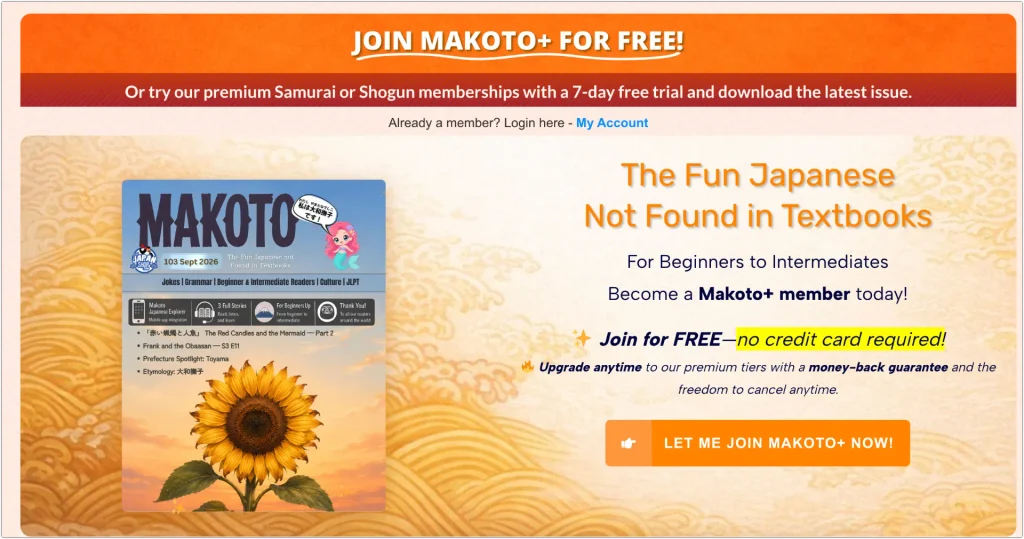
Makoto+ is the closest thing on this list to a traditional Japanese-learning resource.
Its digital magazine combines short Japanese reading with vocabulary, grammar, kanji, culture, stories, and audio. That makes it useful when authentic Japanese still feels like too large a jump.
Instead of opening an article and immediately needing five other tools, you can work through the language inside the same learning environment.
What you can learn: Everyday vocabulary, grammar in context, kanji readings, short narrative Japanese, and listening alongside reading.
The downside: Eventually, learner material can become too comfortable. If you already read around N2, I would start putting more of your time into native magazines.
Try it if: You still stop so often to look things up that reading stops feeling like reading.
Free option: A free membership gives you some sample learning content before you upgrade.
Read: Makoto+
2. Hiragana Times — Best for Bilingual Japanese Reading
Level: N4–N2
Best for: Learners who want Japanese culture with English, furigana, and audio support.
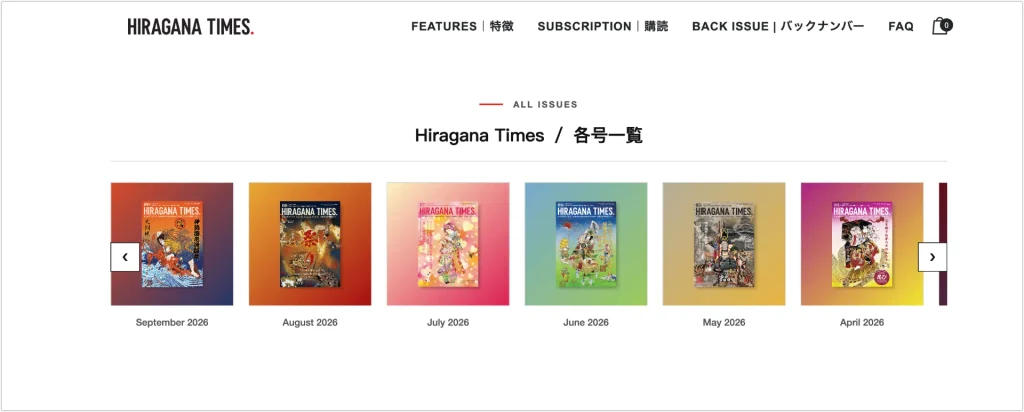
Hiragana Times is one of the best-known Japanese magazines designed specifically for learners.
Its biggest advantage is the amount of support around the Japanese. You can read about Japanese culture, society, travel, and everyday life without being left completely alone when something becomes difficult.
English support also lets you keep reading instead of turning every paragraph into dictionary practice.
What you can learn: Culture, society, everyday vocabulary, travel-related Japanese, and reading-listening connections.
The downside: The English can become too convenient. If you notice yourself reading the translation before trying the Japanese, it may be time to mix in more native-only content.
Try it if: You want something between a textbook and a native publication.
Free option: Official sample content is available.
Read: Hiragana Times
3. たくさんのふしぎ — Best for Easier Native Japanese
Level: Around N4–N3
Best for: Learners who want their first magazine written for native Japanese readers.
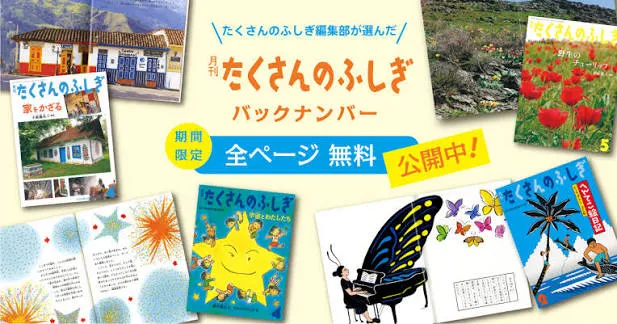
たくさんのふしぎ is a children’s monthly publication from Fukuinkan Shoten rather than a Japanese-learning magazine.
Each issue focuses on one topic from nature, science, history, culture, people, or everyday life.
That single-topic format is useful for language learning because the same vocabulary tends to repeat throughout an issue.
You are also reading sentences written for Japanese readers rather than sentences created to illustrate a grammar point.
What you can learn: Descriptive Japanese, concrete vocabulary, explanation patterns, and natural sentence flow.
The downside: Children’s content is not automatically easy Japanese. A science issue can contain plenty of vocabulary that never appears in an N4 textbook.
Think of it as easier native reading, not JLPT-controlled reading.
Try it if: Graded readers are starting to feel artificial.
Read: Fukuinkan Shoten
4. 朝日中高生新聞 — Best Bridge Into Japanese News
Level: N3–N2
Best for: Learners who want real current affairs without jumping straight into an adult newspaper.
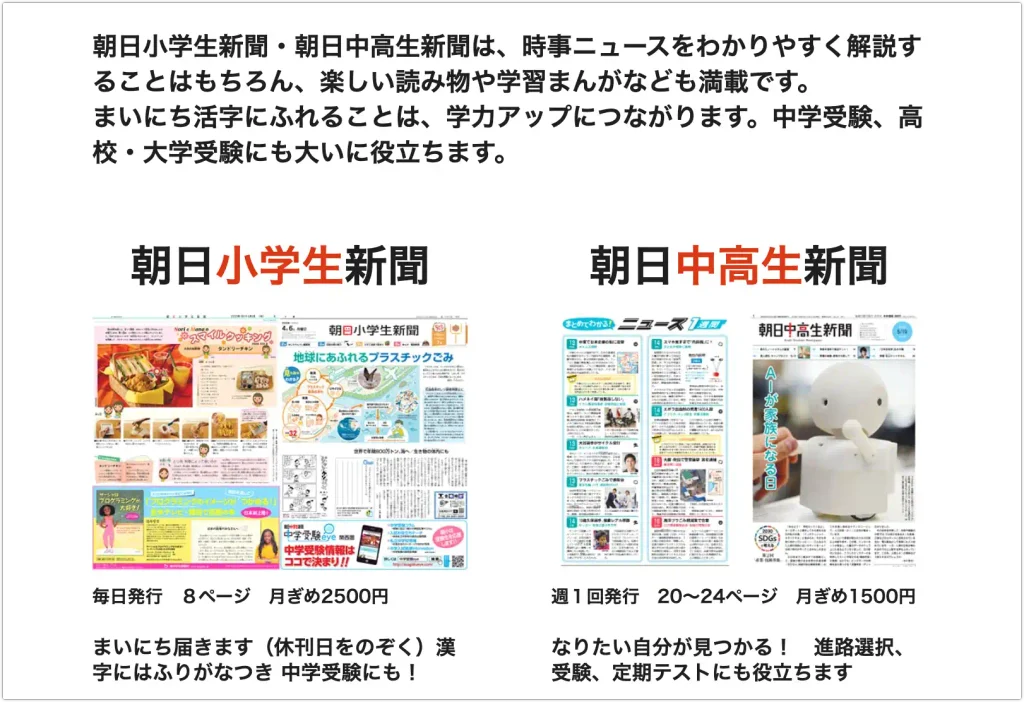
朝日中高生新聞 is written for Japanese middle and high school students.
You still get real news topics, including society, science, politics, culture, and current events, but the reporting assumes less background knowledge than a major adult newspaper.
That makes it a useful transition from learner material into Japanese news.
What you can learn: Current affairs vocabulary, explanatory news Japanese, political and social terms, and basic newspaper structure.
The downside: The language may match your level while the content does not match your age.
That was the main problem for me with youth-focused publications. Some school-life topics simply did not give me much reason to keep reading.
A resource can fit your Japanese level without fitting your interests.
Try it if: Ordinary Japanese newspapers are still too dense.
Read: 朝日中高生新聞
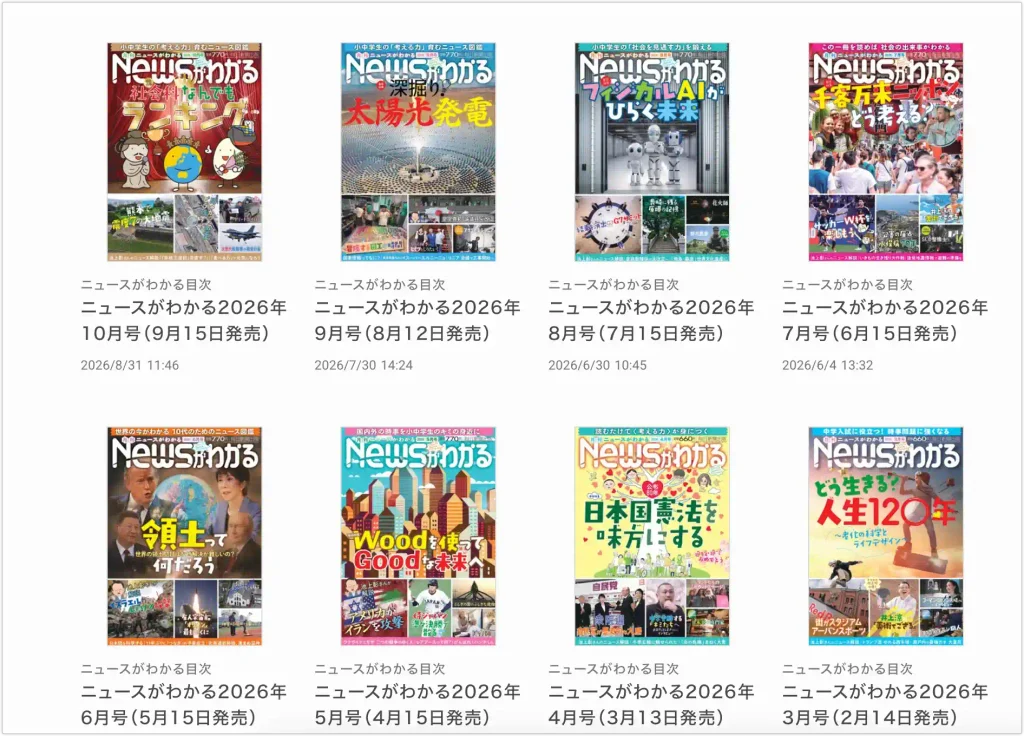
5. 月刊ニュースがわかる — Best for News With More Context
Level: N3–N2
Best for: Learners who can read news sentences but still struggle with the background behind them.
Knowing every word in a news article does not necessarily mean you understand the story.
月刊ニュースがわかる is useful because it explains current affairs for younger Japanese readers rather than assuming they already understand the political, scientific, or economic background.
Topics can include:
- politics
- economics
- technology
- international affairs
- science
- social issues
That makes it a good middle step between simplified Japanese news and full newspapers.
If you prefer a more explicitly learner-focused news tool, I also covered the reading support and graded news features in my Todaii Japanese review.
The downside: Some design and editorial choices still reflect its younger audience.
Try it if: The grammar of Japanese news is manageable, but the context keeps losing you.
Free option: Check Fujisan for current sample or back-issue previews before buying.
6. 一番日本語 — Best for Learners Who Read Chinese
Level: N3–N2
Best for: Japanese learners who can also use Chinese as a support language.
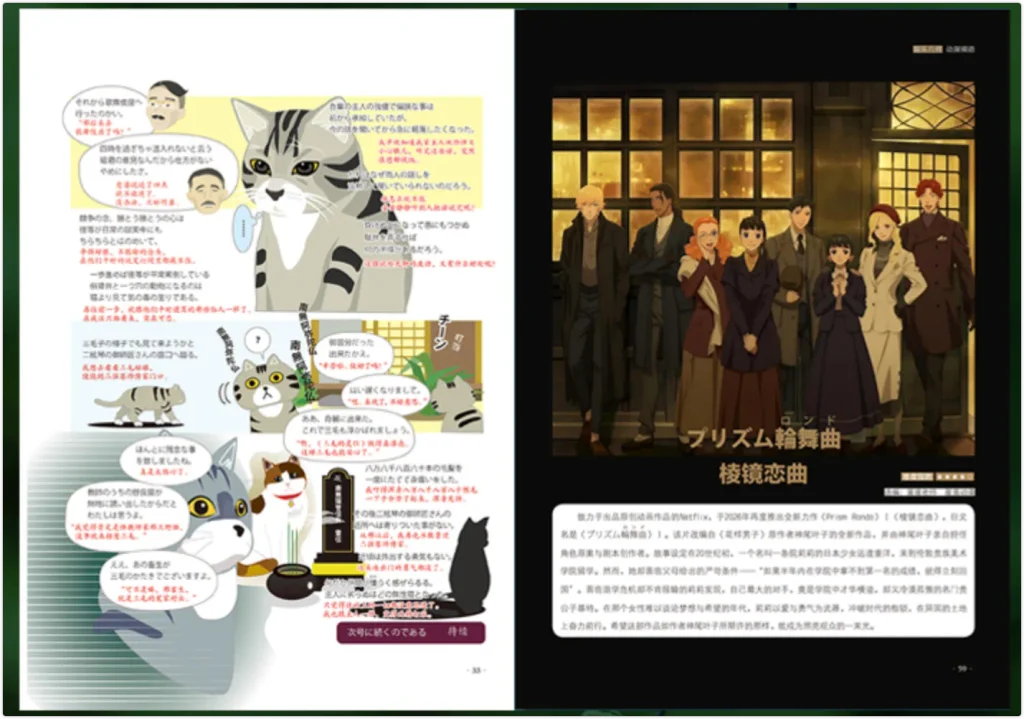
一番日本語 is unusual in an English-language roundup because the supporting language is Chinese.
I found the Chinese-Japanese format convenient. When a sentence was difficult, I could check the meaning quickly without turning the whole reading session into dictionary work.
It also includes Japanese-learning, culture, lifestyle, and travel content.
What you can learn: Everyday expressions, culture, travel vocabulary, and learner-focused Japanese.
The downside: The content can lean heavily toward travel and lighter topics.
After a while, I wanted a wider range of vocabulary and more adult subject matter. For an English-speaking reader who does not know Chinese, Hiragana Times or Makoto+ obviously makes more sense.
Try it if: You read Chinese and want more support than a native magazine provides.
7. LDK — Best for Everyday Japanese Vocabulary
Level: N2
Best for: Shopping, food, household life, products, and practical Japanese.
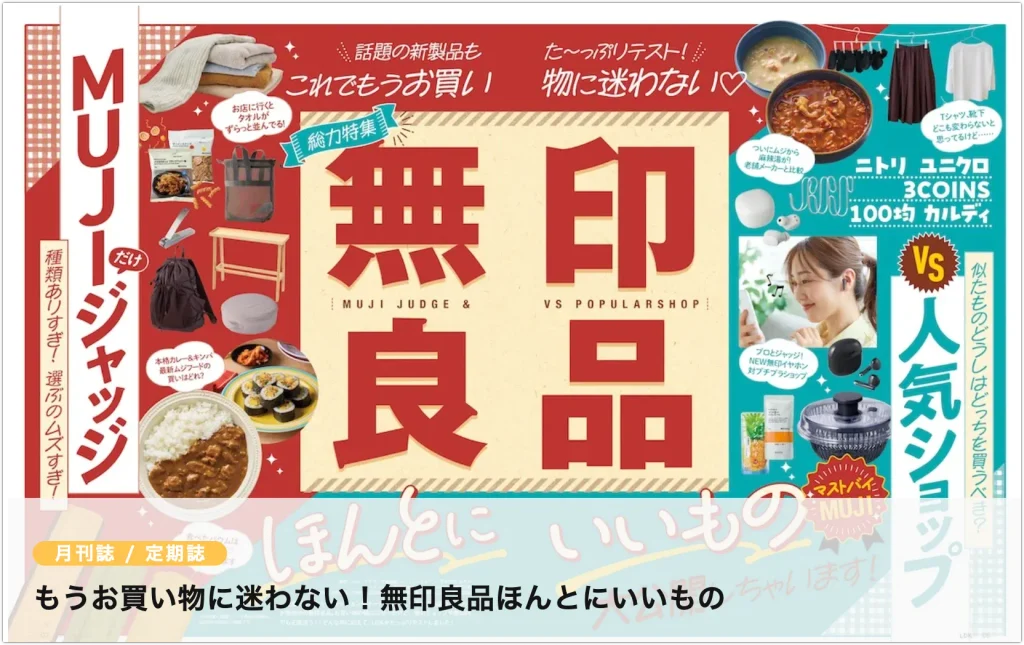
LDK is one of the magazines I like for a very different reason: the Japanese feels immediately connected to ordinary life.
It tests and compares products across categories such as cleaning, cooking, stationery, skincare, household goods, and shopping.
You repeatedly see language about:
- whether something works
- whether it is worth the price
- which product is easier to use
- what is better or worse
- how products compare
That naturally exposes you to useful descriptive and comparative Japanese.
What you can learn: Consumer vocabulary, practical adjectives, everyday descriptions, comparisons, and household Japanese.
Why I like it for N2: It is native Japanese without the heaviness of political or economic reporting.
The downside: It is still product-heavy. If you do not enjoy household or shopping content, the vocabulary may be useful but the magazine will be difficult to sustain.
Try it if: You want Japanese that feels close to everyday adult life.
Free option: You can read a large amount of similar editorial content for free on 360LiFE.
8. 日経WOMAN — Best for Work, Study and Self-Improvement Japanese
Level: N2–N1
Best for: Work, money, study habits, productivity, routines, and adult life.
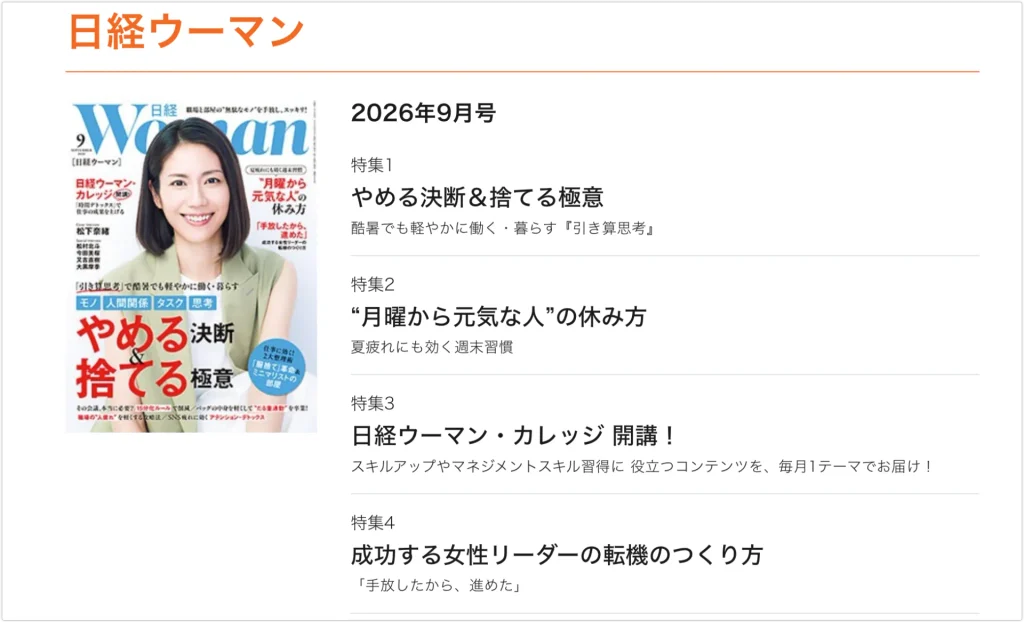
日経WOMAN is one of the native publications I find most interesting for language learning.
The reason is the topic vocabulary.
Issues and related special editions regularly cover areas such as:
- 勉強
- 学び
- 習慣
- キャリア
- お金
- 自己投資
- 時間管理
- 人間関係
- 暮らし
These are useful adult topics that do not appear nearly enough in JLPT material.
They also repeat. If you read several articles about studying, work, money, or routines, you keep meeting the same vocabulary and expressions in slightly different contexts.
That is exactly how I prefer to learn Japanese vocabulary: through repeated exposure rather than isolated word lists.
The 日経WOMAN special editions are also worth checking
The themed mooks can be even more appealing than the regular magazine if you care about a particular subject.
For example, 大人の心地いい暮らし方 focuses on decluttering, household organization, spending, habits, and lifestyle.
Just do not expect a generous preview.
I checked its Rakuten 立ち読み, and only a couple of useful pages were available.
The downside: Some issues focus heavily on a particular life stage, so always check the table of contents first.
Try it if: You want adult Japanese around topics you actually deal with outside language study.
9. ELLE Japon — Best for Fashion, Interviews and Culture
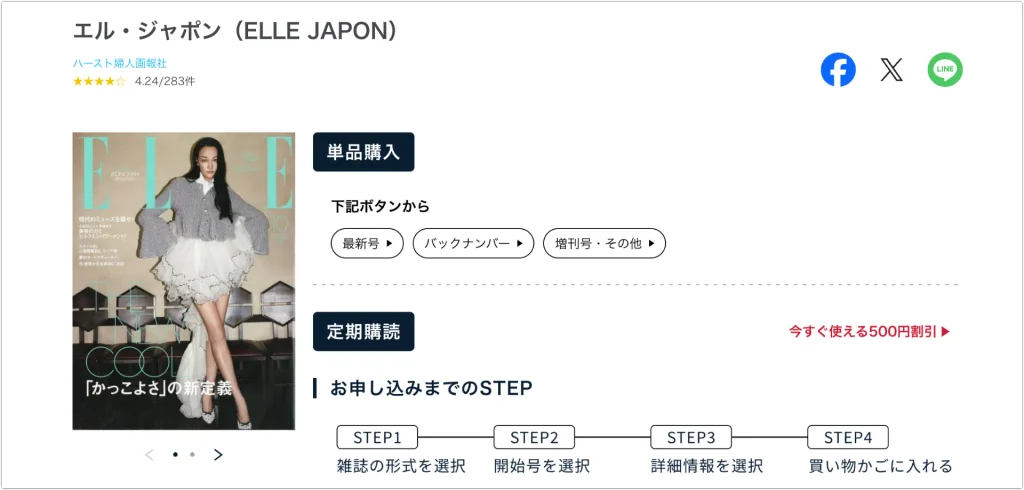
Level: N2–N1
Best for: Fashion, film, art, interviews, travel, and contemporary culture.
ELLE Japon is more varied than “fashion magazine” might suggest.
Alongside style and beauty, you can find interviews, cinema, culture, travel, art, food, and profiles of people in creative industries.
That makes it useful if you already enjoy this kind of media in English.
You are effectively moving an existing reading habit into Japanese.
What you can learn: Interview language, culture writing, fashion vocabulary, profiles, film and art vocabulary, and contemporary expressions.
The downside: The vocabulary is still specialized.
If your main goal is business Japanese, academic reading, or JLPT preparation, I would use ELLE as supplementary reading rather than your main resource.
Try it if: You would read ELLE even if Japanese study were not involved.
Free option: Start with free articles on ELLE Japan before paying for a magazine issue.
10. CNN English Express — Best Bilingual Magazine for N1+
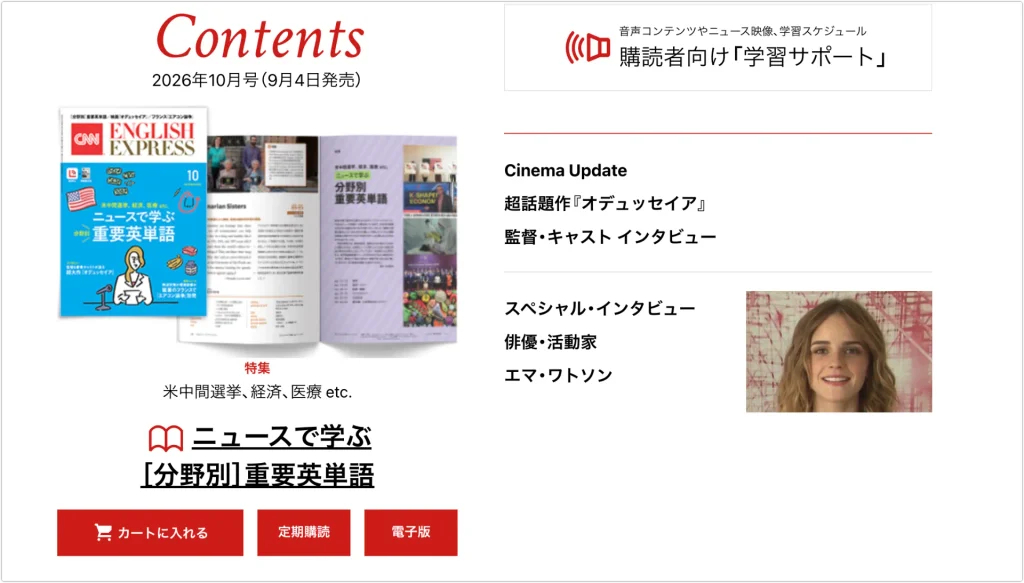
Level: N1+
Best for: Advanced English-speaking learners who enjoy news, society, culture, and international topics.
This is probably the most unusual resource on the list.
CNN English Express is actually an English-learning magazine made for Japanese readers.
That is exactly why I find the format interesting for advanced Japanese learners.
The magazine combines CNN news and interviews with Japanese translations, explanations, vocabulary support, and English listening material.
For an English-speaking learner, that support can work in reverse.
When the Japanese explanation becomes difficult, the English gives you a fast route back to the meaning without needing to stop and translate everything yourself.
Why I like the format
I have tried several other types of reading.
Lifestyle magazines can become too narrow.
Japanese newspapers can become dense and heavily focused on politics or economics.
Long novels require more continuity when you only have a short reading session.
CNN English Express sits in a useful middle ground:
shorter pieces + varied adult topics + Japanese explanations + English support
What you can learn: News and social vocabulary, formal explanations, interviews, international affairs, culture, and higher-register Japanese.
It also includes audio, so you can connect reading with listening. For more listening-focused resources, see my guide to Japanese podcasts for learners.
The downside: It is one of the more expensive options here, at around ¥1,540 per issue, and a large part of the product is obviously designed for people learning English.
Try it if: You are around N1+, already like reading news and social topics, and want bilingual support without going back to beginner material.
Read: CNN English Express
11. 日経トレンディ — Best for Trends, Money and Business Vocabulary
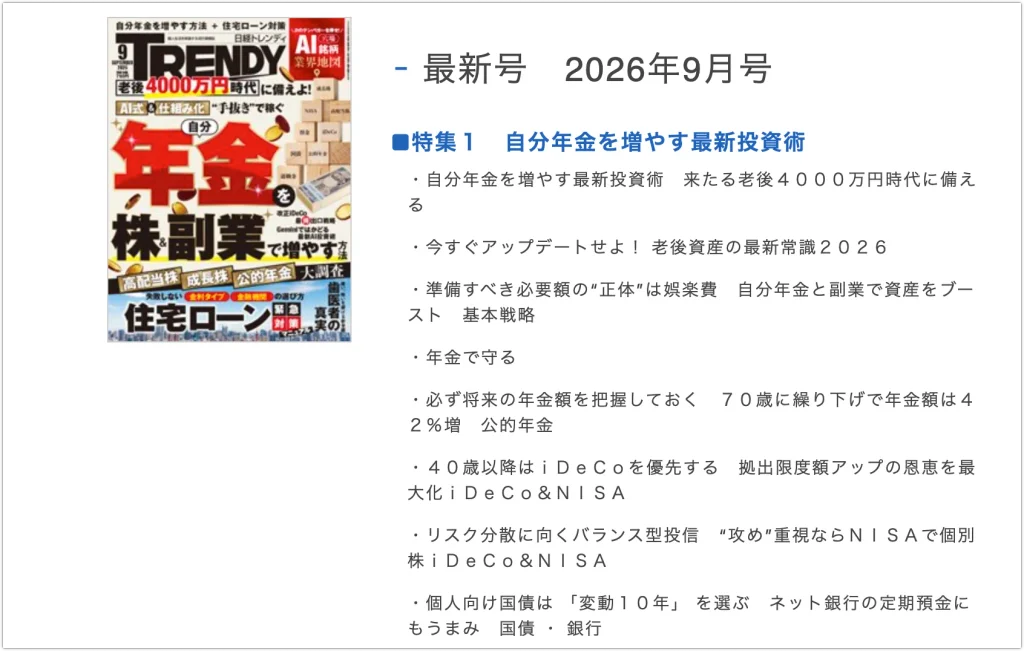
Level: N1
Best for: Marketing, technology, money, products, consumer trends, and business interests.
日経トレンディ goes further into consumer behavior, money, products, technology, and market trends than a general lifestyle magazine.
That makes it particularly relevant if your work or interests already overlap with these areas.
Common topic vocabulary includes:
- 投資
- 資産
- 市場
- 商品
- 消費
- テクノロジー
- サービス
- トレンド
For someone working in marketing, ecommerce, finance, tech, or content, this vocabulary may be much more useful than traditional political news.
The downside: Topic knowledge matters.
If you have never read about investing or markets in English, Japanese is probably not the easiest place to learn the subject from scratch.
Try it if: You want your Japanese reading to overlap with professional interests.
12. 週刊文春 — Best for Full Native Japanese Immersion
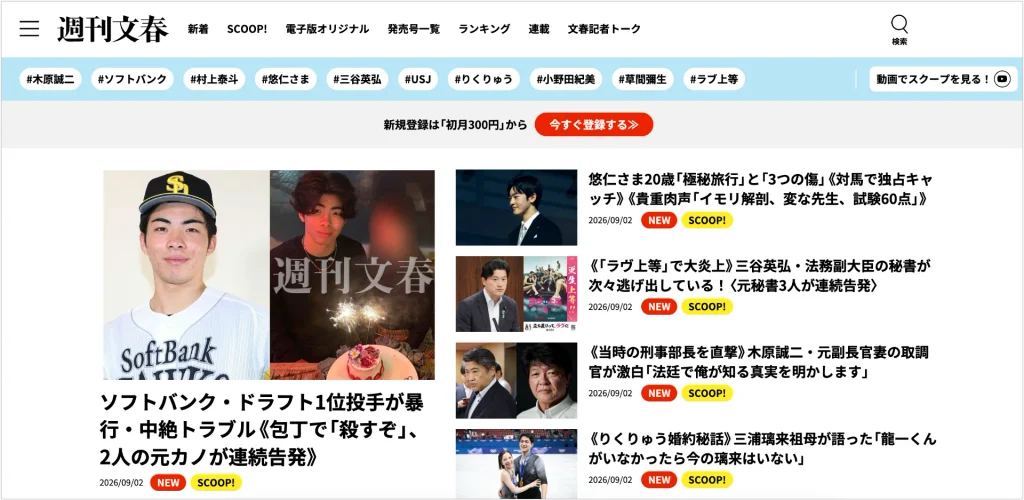
Level: N1+
Best for: Journalism, entertainment, interviews, social issues, commentary, and cultural context.
週刊文春 is where I would stop thinking about “materials for Japanese learners.”
It is simply Japanese media.
You can encounter reporting, interviews, politics, entertainment, commentary, cultural stories, quotations, and stylistically very different columns in the same publication.
That range is exactly what makes it valuable at an advanced level.
What you can learn: Headlines, journalistic prose, colloquial quotations, social commentary, entertainment vocabulary, political language, and culturally dense Japanese.
Why it can still be hard after N1
JLPT N1 does not give you decades of Japanese cultural knowledge.
You may understand the grammar of a paragraph and still miss:
- who someone is
- why a reference matters
- what a headline is implying
- why an expression is funny
- why a story became controversial
That is a different kind of difficulty from exam Japanese.
The downside: There is very little learner support, and cultural context can be harder than the grammar itself.
Try it if: N1 material already feels manageable and you want to move beyond test-oriented Japanese.
Free option: Start with free articles on 文春オンライン before paying for the full magazine.
Which Japanese Magazine Should You Choose?
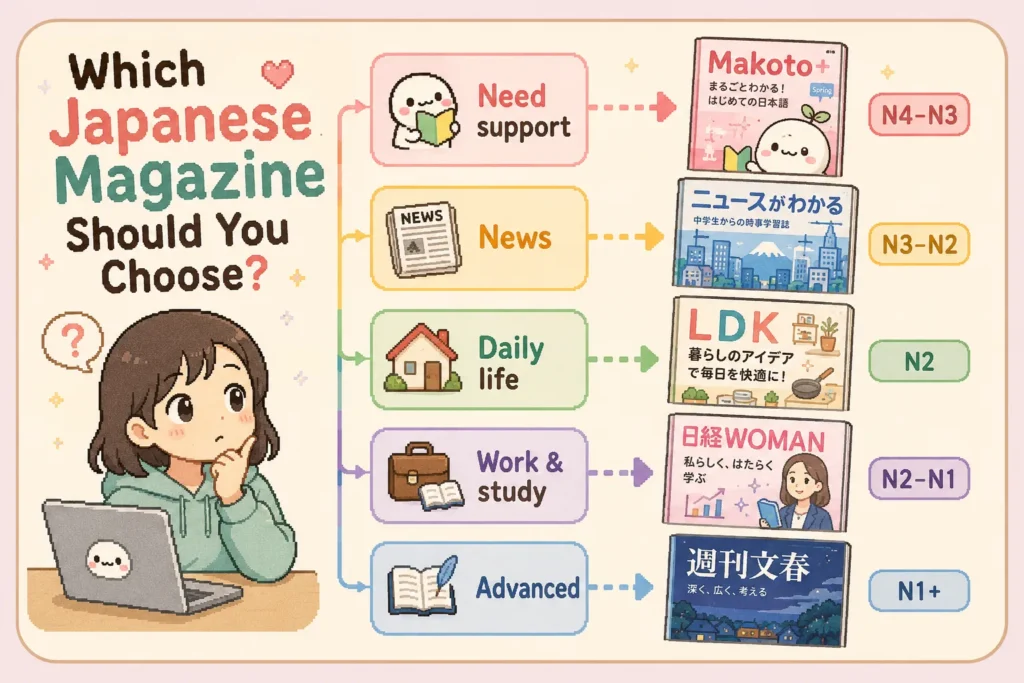
For N4–N3
Start with Makoto+, Hiragana Times, or たくさんのふしぎ.
You still want enough support that reading does not become constant dictionary work.
For N3–N2
Try 朝日中高生新聞 or 月刊ニュースがわかる for news.
If you are ready for adult native content, start experimenting with easier sections of LDK.
For N2–N1
This is where native magazines become much more useful.
Choose based on what you actually care about:
- LDK: everyday life and products
- 日経WOMAN: work, study, money and habits
- ELLE Japon: fashion and culture
- 日経トレンディ: business and consumer trends
For N1+
Try CNN English Express if you still want English support.
Move into 週刊文春 when you want native Japanese with very little accommodation for learners.
How to Use Japanese Magazines to Build Vocabulary
I do not try to memorize every unfamiliar word I see.
If I stop for everything, magazine reading quickly turns into dictionary practice.
Instead, I pay more attention to words and expressions that:
- appear repeatedly
- affect my understanding of the article
- fit topics I actually talk about
- appear in useful collocations
- show me a more natural way to say something I already know
A word becomes much easier to remember after you have met it in several real sentences.
That is one of the main reasons I like magazines: one issue usually stays around the same topic long enough for useful vocabulary to repeat.
Where to Read Japanese Magazines Outside Japan
Before importing a physical copy, check whether the publication is available through:
- the publisher’s official website
- Rakuten Kobo
- Rakuten Magazine
- Kindle Japan
- dマガジン
- Fujisan
- browser-based digital editions
Digital access can vary by publication and country, so check the individual magazine before subscribing.
Also be careful with 立ち読み.
It literally means preview reading, but the amount you get can vary dramatically. Sometimes you may only see a couple of pages.
That is enough to inspect the design.
It is not necessarily enough to decide whether you will enjoy an entire magazine.
My preferred approach is still:
free article or preview → one issue → subscription
Are Japanese Magazines Good for JLPT Reading Practice?
Yes, but I would use them differently from actual JLPT material.
If the exam is close, practice questions should take priority because they train:
- question types
- timing
- answer logic
- test-specific reading strategies
Magazines are more useful for building the underlying reading ability that develops over time:
- vocabulary breadth
- reading speed
- natural collocations
- tolerance for unknown words
- familiarity with native sentence patterns
So I would use magazines alongside JLPT study rather than replacing practice tests with them.
Best Japanese Magazines for Learners FAQs
What Japanese magazine can I read at N3?
Hiragana Times, たくさんのふしぎ, 朝日中高生新聞, and 月刊ニュースがわかる are good places to start. Makoto+ offers more support if native material still feels tiring.
What is the best Japanese magazine for N2 learners?
LDK and 日経WOMAN are strong choices for practical native Japanese. 朝日中高生新聞 and 月刊ニュースがわかる work better if you specifically want news.
Can I read native Japanese magazines before N1?
Yes. You do not need to understand every word. Around N3–N2, start with shorter or more predictable native content and gradually increase the difficulty.
Is Hiragana Times worth it?
It is most useful when you still benefit from English, furigana, and audio support. If those features are no longer helping, native magazines may give you more room to grow.
Is CNN English Express good for learning Japanese?
For advanced English-speaking learners, it can be. The Japanese explanations and translations provide a useful bilingual safety net while the topics remain much more advanced than typical learner material.
Can I read 週刊文春 at N1?
Yes, but N1 does not guarantee comfortable reading. Cultural references, names, topic knowledge, and vocabulary breadth can be harder than the grammar.
What is the best Japanese magazine for everyday vocabulary?
LDK is especially useful for shopping, household life, products, and practical descriptions. 日経WOMAN is better for work, study, money, habits, and adult life.
Are there free Japanese magazines for learners?
Fully free magazines are less common, but several publications offer free samples or related web content. LDK’s 360LiFE, 文春オンライン, ELLE Japan, Makoto+, and Hiragana Times are good places to start without buying an issue.
Final Thoughts
I prefer Japanese reading that gives me real vocabulary and expressions in context, but it still has to be something I actually want to open.
That matters more to me than finding the theoretically perfect resource for my JLPT level.
Start with one magazine that matches your interests, read a few pages regularly, and notice which words keep coming back.
Those repeated words are often the ones that finally stick.